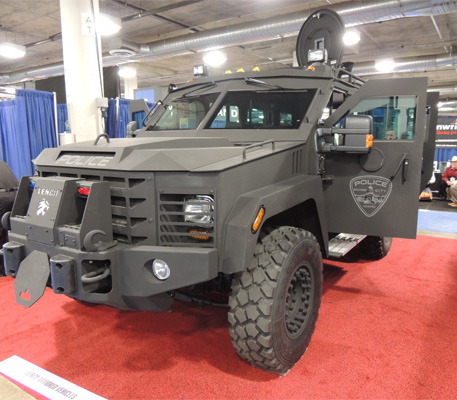
BlueSheepdog
10 Years Experience
Around the Way, FL
Male, 40


Cheating death and fighting communism: that is how a fellow officer once described our job. It was meant to be funny, but as time went on it seemed all too true.
I spent more than ten years in law enforcement, all of it on the street in uniform patrol. I've been a patrol officer, instructor, sergeant and lieutenant.
Do not report crimes here. Nothing here should be considered legal advice. All opinions are my own.
A detective will generall drive an unmarked car provided by the agency. The type of vehicle varies greatly. I've seen everything from a Prius to a Mustang. Most departments will go with a domestic sedan, though that is not always the case. Sometimes the detective's job will dictate the need for a different kind of car. For example, a narcotics officer will not be driving a Crown Vic. Sometimes a vehicle might be seized through civil forfeiture and be used by detectives. Unless you think the car is integral to the story go with a Ford Taurus or Chevy Impala.
Share Answer: 

(see second part of this question)
Share Answer: 
Its possible, but how valuable is that information to the officers? Not terribly valuable probably. The cops either know the names already, or have no way of knowing if the subject being arrested is giving them good info.
A more likely scenario would be the subject provides the officers with very detailed information on the dealers and is given a court date for some time in the future in exchange. Then the officers can determine if the information is good. If so, the officers can appear in court an explain to the judge that the subject was cooperative in an investigation and request favorable treatment of the informant.
Share Answer: 
Will the foreign state extradite? If so, feel free to call the local authorities. If not, the local cops will not be able to arrest him for the warrant.
Share Answer: 
Inner City English Teacher
 What was the saddest student journal entry you've read?
Chef
 Is it true that the "specials" are usually the stuff that's been sitting around awhile?
3D Games Developer/Programmer
 How does 3D fool the human brain into seeing an extra dimension?
Ok. Is there a question?
Share Answer: 
I do not have a military background, but it looks like the USMC has a variety of law enforcement related MOS: http://en.wikipedia.org/wiki/List_of_United_States_Marine_Corps_MOS#58_Military_Police_and_Corrections
That said, I've worked with plenty of officers who were former miltary that did not have a MP background and they did very well in the hiring process. At my last department, I worked with a former Marine who was an aircraft mechanic, another who was in motor transport and a third who was a machine gunner. All were good cops.
If there is something specific that interests you, go for it. If you have a solid service record and even manage to get yourself promoted, it will all work to your benefit when you apply for a civilian law enforcement job.
Remember your oath, stay safe & thanks for your service.
Share Answer: 
If I understand the question correctly (entered on green, waited for traffic to clear to complete the turn, light turned red and then you cleared the intersection) - no. But then, laws vary from place to place.
Share Answer: 
-OR-
 Login with Facebook
 (max 20 characters - letters, numbers, and underscores only. Note that your username is private, and you have the option to choose an alias when asking questions or hosting a Q&A.)
(A valid e-mail address is required. Your e-mail will not be shared with anyone.)
(min 5 characters)
By checking this box, you acknowledge that you have read and agree to Jobstr.com’s Terms and Privacy Policy.
-OR-
Register with Facebook(Don't worry: you'll be able to choose an alias when asking questions or hosting a Q&A.)



 Browse Jobs
 Host a Q&A
 Search

 Submit Your Question
 Host a Q&A
 Last 7

