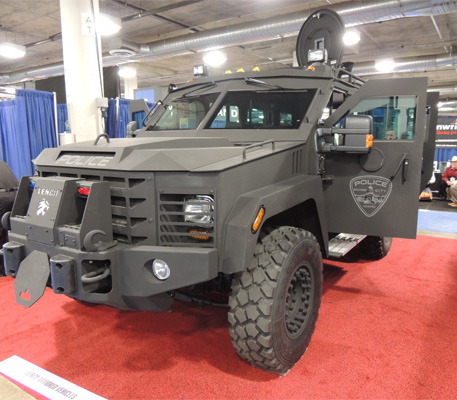
BlueSheepdog
10 Years Experience
Around the Way, FL
Male, 40


Cheating death and fighting communism: that is how a fellow officer once described our job. It was meant to be funny, but as time went on it seemed all too true.
I spent more than ten years in law enforcement, all of it on the street in uniform patrol. I've been a patrol officer, instructor, sergeant and lieutenant.
Do not report crimes here. Nothing here should be considered legal advice. All opinions are my own.
An interesting, but loaded, question.
The term "police brutality" is a subjective one that is likely to inflame the conversation. I'll presume that you are referring to the unlawful use of force, which is any time a police officer uses force - regardless of the perceived brutality - when it is not legally permissible.
Police officers are permitted to use that force which is reasonable during the performance of their duties. Many people do not understand what is reasonable because they do not have the training in, or understanding of, the dynamics of a violent encounter. I'd suggest looking at credible sources such as the Force Science Institute ( http://www.forcescience.org/ ) for a better understanding of the application of force. Anything you've seen in the movies is likely crap, by the way.
For a better understanding of when officers may use force, a review of the case law is an excellent starting point. Graham v. Connor [490 U.S. 386 (1989)] is typically cited as being the defining case regarding police use of force. Although the case clarified a number of issues, the court essentially said that things were pretty clearly stated in their earlier decision in Tennessee v. Garner [471 U.S. 1 (1985)]. Both cases offer remarkably insightful opinions, and they should be read in full. Summaries of the cases in Wikipedia and elsewhere fail to give the true scope and color of the opinions.
An additional problem with your question is the unstated assumption that there are frequent incidents of police officers unlawfully using force. I believe the premise is false, and every credible study on police use of force I have seen shows that officers are very hesitant to use force. In fact studies have shown that even when clearly justified, officers still are slow to use force.
Are there times when an officer unlawfully uses force and are not criminally prosecuted? Sure. There are a variety of reasons this may be true. For example, the unlawful use of force may be charged at the federal level if the officer was acting under "color of law," or at the state level for the charge of battery (or similar). Just like any other case, the prosecution must be able to prove beyond a reasonable doubt that the accused officer committed the crime and that he or she intended to commit the crime (mens rea). Lacking the ability to prove those things, the prosecution will not proceed.
Share Answer: 

Call your local police department and ask for their assistance. They will know what to do.
Share Answer: 
Call the phone company.
Share Answer: 
You should contact the admissions officer and apply.
Share Answer: 
School Bus Driver
 If your bus is in an accident that was ruled your fault, would you lose your job?
Employment Lawyer
 Can I be sued for asking a co-worker on a date?
Private Detective
 Can I be a successful P.I. if I'm hardworking but don't have any connections in law enforcement or politics?
Ok. Call your local police department and ask for their assistance.
Share Answer: 
It depends on the circumstances. For example, if police received a 911 call from a building and the doorman tried to block the officers' entry, he would be arrested for obstruction.
Share Answer: 
A "CPU" is only part of the computer system, and typically not the slow part. If the officer is using some type of computer, it is networked via cell data service. The network is likely 3G or slower, so sending a request (such as a check on the validity of your license) is not as fast as you might hope. Also, since many of the computers are running some type of Windows OS, crashes are common. Frequently, I have sat on the side of the road while waiting for the system to reboot. Also, if there is someone that has a warrant who has a similar name, the officer will do additional research to make sure he or she shouldn't arrest you. 10-20 minutes isn't a long time for you to be stopped.
Share Answer: 
-OR-
 Login with Facebook
 (max 20 characters - letters, numbers, and underscores only. Note that your username is private, and you have the option to choose an alias when asking questions or hosting a Q&A.)
(A valid e-mail address is required. Your e-mail will not be shared with anyone.)
(min 5 characters)
By checking this box, you acknowledge that you have read and agree to Jobstr.com’s Terms and Privacy Policy.
-OR-
Register with Facebook(Don't worry: you'll be able to choose an alias when asking questions or hosting a Q&A.)



 Browse Jobs
 Host a Q&A
 Search

 Submit Your Question
 Host a Q&A
 Last 7

