
LIsa Black
Cape Coral, FL
Female, 49


I spent the five happiest years of my life in a morgue. As a forensic scientist in the Cleveland coroner’s office I analyzed gunshot residue on hands and clothing, hairs, fibers, paint, glass, DNA, blood and many other forms of trace evidence, as well as crime scenes. Now I'm a certified latent print examiner and CSI for a police department in Florida. I also write a series of forensic suspense novels, turning the day job into fiction. My books have been translated into six languages.
I can't think of any one in particular that was the most 'complicated'--many were difficult and complicated for different reasons. Forensics is only part of the whole investigation, so things really get much more complicated for the detectives who not only have to absorb the information we're giving them but deal with victims, witnesses, suspects, documentation, records, warrants and prosecutors. I worked one where the victim had been taken to three different places before the body was dumped and burned, so there were indoor scenes, outdoor scenes, the suspect's house to deal with. Right now we're dealing with one that spans 30 years, so trying to find reports and piece together who did what and when and what, if anything, still remains to be done. And we had one earlier this year that had inexplicable behavior by about 9 different people over three days and all to cover up an accidental death. Hope that helps.
Share Answer: 

They didn’t have forensics degrees when I went to school, so learned all the forensic tasks were on the job or continuing education courses. But the science background helps with understanding lab procedures, preparing reagents, and of course explaining what’s going on during the various processes.
Share Answer: 
I’m sorry but I’ve never worked in toxicology. Sorry I couldn’t help!
Share Answer: 
Contact your local PD and ask what their procedure is. You will probably have to fill out an application and a waiver. Best of luck!
Share Answer: 
Border Patrol Agent
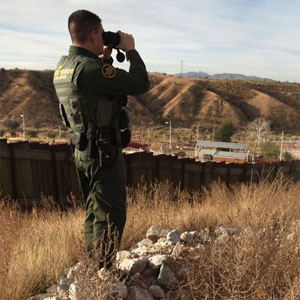 What's the most creative way you saw cartels getting drugs across the border?
Stand-Up Comedian
 What types of crowds are the worst for you to to perform for?
Professional Bull Rider
 Have you been seriously injured while bull-riding?
I”m sorry but I”ve never used thin layer chromatography. If I had, it most likely would have been to distinguish extracted fiber dyes. As far as I know it’s the only way to determine if natural fibers likely had the same source.
Share Answer: 
Sometimes. Perhaps 10% of the time.
Share Answer: 
How does that question relate to forensics?
Share Answer: 
-OR-
 Login with Facebook
 (max 20 characters - letters, numbers, and underscores only. Note that your username is private, and you have the option to choose an alias when asking questions or hosting a Q&A.)
(A valid e-mail address is required. Your e-mail will not be shared with anyone.)
(min 5 characters)
By checking this box, you acknowledge that you have read and agree to Jobstr.com’s Terms and Privacy Policy.
-OR-
Register with Facebook(Don't worry: you'll be able to choose an alias when asking questions or hosting a Q&A.)



 Browse Jobs
 Host a Q&A
 Search

 Submit Your Question
 Host a Q&A
 Last 7

