
LIsa Black
Cape Coral, FL
Female, 49


I spent the five happiest years of my life in a morgue. As a forensic scientist in the Cleveland coroner’s office I analyzed gunshot residue on hands and clothing, hairs, fibers, paint, glass, DNA, blood and many other forms of trace evidence, as well as crime scenes. Now I'm a certified latent print examiner and CSI for a police department in Florida. I also write a series of forensic suspense novels, turning the day job into fiction. My books have been translated into six languages.
I'm sorry but I have not heard of that case.
Share Answer: 

At my agency we send all DNA testing to the state lab. We can give them the scenario of our crime and ask them to rush testing, but how they decide to handle their casework is entirely up to them.
Share Answer: 
If you’re looking at behavioral psychology, I’m afraid I have no idea what job requirements would be. Try to find the websites of professional organizations, like American Academy of Forensic Sciences, and check their job vacancy postings for job requirements. I’m sure there must be national organizations of behavioral psychology as well, and they should be able to guide you. Best of luck to you.
Share Answer: 
They would put themselves at risk of contracting kuru, which is similar to Creutzfeldt-Jacob disease.
Share Answer: 
Las Vegas Cab Driver
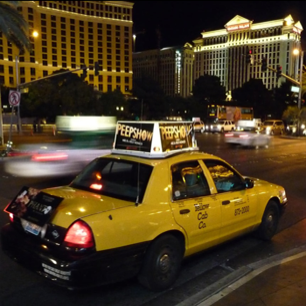 Do people ever ask you to keep your meter off in exchange for a cheaper fare?
Rap Promoter / Manager
 Do venues you rent express concern about a higher risk of violence because it's a rap concert?
Subway Store Manager
 Does Subway have a secret menu?
I’m sorry but my job has absolutely nothing to do with auditing voting machines. I have zero expertise in that area.
Share Answer: 
Nope, not planning on it!
Share Answer: 
I don’t know. Luckily I don’t have to deal with those cases other than assisting in a search warrant, since I am not trained in downloading computers and phones (my coworker does that). I think you’’d have to ask a lawyer.
Share Answer: 
-OR-
 Login with Facebook
 (max 20 characters - letters, numbers, and underscores only. Note that your username is private, and you have the option to choose an alias when asking questions or hosting a Q&A.)
(A valid e-mail address is required. Your e-mail will not be shared with anyone.)
(min 5 characters)
By checking this box, you acknowledge that you have read and agree to Jobstr.com’s Terms and Privacy Policy.
-OR-
Register with Facebook(Don't worry: you'll be able to choose an alias when asking questions or hosting a Q&A.)



 Browse Jobs
 Host a Q&A
 Search

 Submit Your Question
 Host a Q&A
 Last 7

