Veroniche
Western Region, US
Female, 54
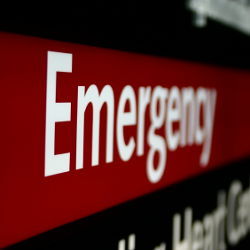
I’ve been an ER nurse manager since 2009. Previously, I spent 24 yrs as an ER nurse. My hospital, a Level III trauma center, sees 70,000+ ER patients/yr. My responsibilities include billing, federal/state regulation oversight, metrics reporting, software education of e-records, and hiring/termination/disciplinary actions. The ER is one of the key impacted areas of healthcare reform. It’s a scary and exciting time for us, not just in the care of patients, but what the future holds for healthcare.
ER's are prohibited by Federal law to turn anyone away that has an "emergency medical condition." So every person has to be screened by a physician or a PA to determine that, which requires taking a medical history and performing a physical exam. By then, the docs in our ER just treat them. There is a hospital in our metro area that has a clinics attached to the ER, and they will screen non emergencies and send them to their clinic. But in our case since we have no on- site clinics, it is to risky to do that and potentially face Federal fines, or risk a patient's safety.
Share Answer: 

I would not go to the ED for a rapid HIV test, although you could. This type of testing should be done through your PCP or clinic to ensure adequate followup. If a person has concerns they have been exposed, one negative test only tells you that you are negative right then. The conversion to a positive result may take months, so you may need further testing. An ED is not the place to create an ongoing doctor-patient relationship. As far as treating with the medication, the physician would talk to you about the risks of immediate treatment with these medications. The meds are not without risks or significant side effects, so that would have to be balanced with the chance of developing a positive HIV test. If you know for certain that the other party was HIV positive, that could sway the decision. It also depends on how much exposure you had--long term continuous exposure vs. a one time thing. There are a lot of factors.
Share Answer: 
You want to get on the phone with billing start talking to them right away. Generally if you are uninsured, the bill can be lowered to approximately the same contract rate insurer's pay, you can get from 40-60% off. Ask for the patient rep, ask to talk with financial services and don't wait. You can also ask for a payment plan for the negotiated balance. Don't forget to go over your bill for any errors, just that could save you some $. Don't ignore the bill though, start talking to them right away. It's when you ignore it that it starts down that collection road. good luck, and start looking for the insurance exchanges to get coverage for yourself.
Share Answer: 
The Emergency physician is a board certified specialist who enters a 3-4 year program after medical school. They are specifically trained in Emergency Medicine--they need to know how to treat any kind of health issue, including trauma, and medical emergencies for adults and children. They are unlike primary care or family physicians, who treat and have established relationships with their patients. ER physicians generally do not have private practices, they only work in ERs or Urgent care centers. In 2011, about 7% of graduating medical school seniors entered an Emergency Medicine residency program in the US--there are about 100 programs in the US. It is a fairly new specialty, just over 20 years, so it is very popular and can be difficult to enter. A physician who is not board certified in Emergency Medicine can still work in an ER, however, I would want a board certified physician treating me if I had an emergency. In the hospital where I work, all of the physicians are board certified, and you will see that in most ERs. ER physicians are not generally on call--they work their shift and go home, so it can be an attractive area for that reason. The malpractice insurance is higher than some other specialties, but not the highest. You can't really compare ER docs to other specialists, whether one is "better" than the other, it is like comparing apples to oranges. I would want an ER doc to treat me if I had an emergency, and I would want an OB/Gyn doc to take care of me if I was having a baby.
Share Answer: 
Special Education Teacher
 How come it often takes years to figure out that a kid is dyslexic?
Toll Collector
 Do you think there will be a time where all tolls are automated?
Professor
 Are professors really subject to the "Publish or Perish" policy?
The nursing leader is called the director, and then under that are managers, and then under that are the charge nurses for each shift. These are all RN positions. So the top nurse is the nursing director.
The physician who is in charge of all of the physicians is called the medical director.
The ED uses both physician assistants and nurse practioners. They are directly supervised by the physicians who are on duty, and practice under the physician's direction. Generally, they provide care to the less seriously ill or injured. Depending on the experience of the PA or NP, the physician may do their own independent examination, or may just "sign off" on the patient without seeing the patient themselves.
Share Answer: 
Wow! I don't have any expertise in that at all! I think that is a question for a police officer or security company.
Share Answer: 
I have not seen that particular series. When I was younger I was hooked on St Elsewhere (shows you how old I am!), and then began watching ER a couple of seasons in, then quit watching. I will watch old reruns of "Trauma--Life in the ER",--which I have found to be the most accurate, however after a while I have said--I do this everyday, why do I want to watch it in my free time. I get frustrated watching medical shows on TV, especially shows such as ER, Chicago Hope, Grey's Anatomy, House, etc. They are all just soap operas set in hospitals. I wonder if law enforcement employees get tired of all of the cop shows on TV?
Share Answer: 
-OR-
 Login with Facebook
 (max 20 characters - letters, numbers, and underscores only. Note that your username is private, and you have the option to choose an alias when asking questions or hosting a Q&A.)
(A valid e-mail address is required. Your e-mail will not be shared with anyone.)
(min 5 characters)
By checking this box, you acknowledge that you have read and agree to Jobstr.com’s Terms and Privacy Policy.
-OR-
Register with Facebook(Don't worry: you'll be able to choose an alias when asking questions or hosting a Q&A.)



 Browse Jobs
 Host a Q&A
 Search

 Submit Your Question
 Host a Q&A
 Last 7

