
LIsa Black
Cape Coral, FL
Female, 49


I spent the five happiest years of my life in a morgue. As a forensic scientist in the Cleveland coroner’s office I analyzed gunshot residue on hands and clothing, hairs, fibers, paint, glass, DNA, blood and many other forms of trace evidence, as well as crime scenes. Now I'm a certified latent print examiner and CSI for a police department in Florida. I also write a series of forensic suspense novels, turning the day job into fiction. My books have been translated into six languages.
I'll email you.
Share Answer: 

That determination is made by the pathologist doing the autopsy, and there are a number of ways--body temperature, rate of decomposition, rigor mortis, but it will be an estimate, not the precise number that you might see on TV. All those things can depend on the environment where the body is, temperature, exposure, physical characteristics of the victim, medical conditions etc. Entomologists can help if there is distinct bug activity at the scene as well.
Hope that helps!
Share Answer: 
Hi, sorry I didn’t get back to you sooner. Again, titles and job requirements aren't uniform, so the only way to know is to call the crime labs in your area or whereever you might be interested in working and ask them. You can also go on the websites for professional organizations such as the American Academy of Forensic Sciences and check out their job vacancy postings and see what the various positions require. Good luck.
Share Answer: 
I’m sorry, no. I don’t feel qualified to do that.
Share Answer: 
Flight Attendant
 What's the scariest flight you've ever been on?
Farmer
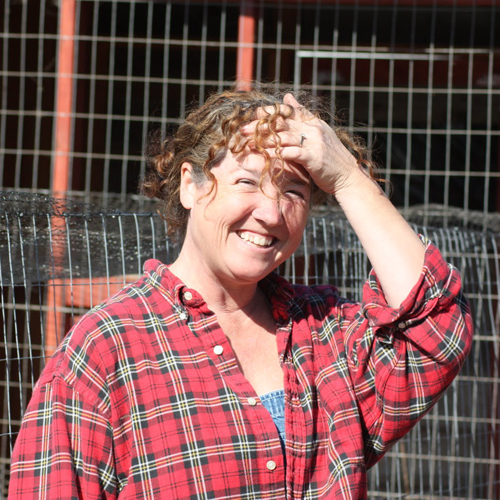 Do friends with office jobs look down on what you do?
Bowling Alley Attendant
 What do bowling alleys do to keep those nasty shoes clean/sanitary?
Yes. I don’t know if it’s actually from the poop or from the skin cells sloughed off on it, but you can.
Share Answer: 
If you want to be a pathologist you will have to be a doctor, and will need to go to med school. So you are looking for a pre-med program. Best of luck!
Share Answer: 
Sorry it took me so long, I was out of town at a conference. But I really don’t know for sure—it’s up to the hiring lab, what they want. I would think a 4 year in Biology with as many Forensic classes as you can get would be best, but a better way to guess would be to call all the labs you’re considering and ask them.Best of luck!
Share Answer: 
-OR-
 Login with Facebook
 (max 20 characters - letters, numbers, and underscores only. Note that your username is private, and you have the option to choose an alias when asking questions or hosting a Q&A.)
(A valid e-mail address is required. Your e-mail will not be shared with anyone.)
(min 5 characters)
By checking this box, you acknowledge that you have read and agree to Jobstr.com’s Terms and Privacy Policy.
-OR-
Register with Facebook(Don't worry: you'll be able to choose an alias when asking questions or hosting a Q&A.)



 Browse Jobs
 Host a Q&A
 Search

 Submit Your Question
 Host a Q&A
 Last 7

