
LIsa Black
Cape Coral, FL
Female, 49


I spent the five happiest years of my life in a morgue. As a forensic scientist in the Cleveland coroner’s office I analyzed gunshot residue on hands and clothing, hairs, fibers, paint, glass, DNA, blood and many other forms of trace evidence, as well as crime scenes. Now I'm a certified latent print examiner and CSI for a police department in Florida. I also write a series of forensic suspense novels, turning the day job into fiction. My books have been translated into six languages.
As I am not trained in accident investigation, I wouldn't have any idea.
Share Answer: 

Sure you can email me at lisa-black@live.com
Share Answer: 
A good way to get a handle on the situation is to look at online job postings from places where you might want to work--the local police department, the county morgue, the state crime lab. They will post the duties and requirements for each position. You can also check the same information on the websites of professional organizations such as the American Academy of Forensic Sciences or the International Association for Identification. That should give you a good start.
Share Answer: 
I would guess in his lap or to his right, but it's impossible to know for sure, since you cannot know exactly how the body was positioned or how powerful the load of the bullet might have been.
Share Answer: 
Private Detective
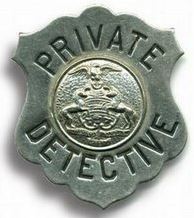 Has anyone ever caught you surveilling them, and what happened?
Inner City English Teacher
 How prevalent are teen pregnancies in your school?
Dry Cleaner
 What happens to clothing at dry cleaners that goes unclaimed?
Generally bodies in the water decompose more slowly than bodies exposed to air, but more specifically than that I cannot tell you. I did find this: https://digital.library.txstate.edu/handle/10877/4078
It's really a pathology question and not my area. Also colder temperatures will cause slower decomposition than warmer temps.
I definitely can't answer your second question but also, are you asking a) how long the person lived as a sailor b) how long the person was in the water before the hand was cut off or c) how long they might have survived in the water after the hand was cut off (assuming they had no access to a tourniquet and such like)? If you could locate someone who worked as a ship's doctor they might be a big help.
Best of luck!!
Share Answer: 
I'm afraid not. I'm guessing that would depend entirely on how large the bandage is and how much the person bled. Best of luck!
Share Answer: 
My guess would be no. I would think the formaldehyde would destroy the DNA in the cells, though I don’t know for sure, and in any event they weren’t doing DNA in the 70’s so you’d have to find something of the person’s to compare the eyeball DNA. If you have something of the person’s retained from the 70’s, especially hair for example, perhaps there is mitochondrial DNA in some cell in the eyeballs that could still be obtained and compared to the mDNA from the hair.Otherwise I doubt ophthalmologists would take or save retinal scans back in the 70’s. Hope that helps. Best of luck!
Share Answer: 
-OR-
 Login with Facebook
 (max 20 characters - letters, numbers, and underscores only. Note that your username is private, and you have the option to choose an alias when asking questions or hosting a Q&A.)
(A valid e-mail address is required. Your e-mail will not be shared with anyone.)
(min 5 characters)
By checking this box, you acknowledge that you have read and agree to Jobstr.com’s Terms and Privacy Policy.
-OR-
Register with Facebook(Don't worry: you'll be able to choose an alias when asking questions or hosting a Q&A.)



 Browse Jobs
 Host a Q&A
 Search

 Submit Your Question
 Host a Q&A
 Last 7

