
LIsa Black
Cape Coral, FL
Female, 49


I spent the five happiest years of my life in a morgue. As a forensic scientist in the Cleveland coroner’s office I analyzed gunshot residue on hands and clothing, hairs, fibers, paint, glass, DNA, blood and many other forms of trace evidence, as well as crime scenes. Now I'm a certified latent print examiner and CSI for a police department in Florida. I also write a series of forensic suspense novels, turning the day job into fiction. My books have been translated into six languages.
Not much free time, no. There's always work to do.
Share Answer: 

I like doing both, because being in the lab all the time can get tedious, but being at crime scenes all the time can get exhausting.
Share Answer: 
Well, you could simply say you're going to be an anthropologist, which is true--I believe you'd have to be an anthropologist first and then specialize in forensic work. They might be disapproving because they believe it will be difficult to get a job--which is probably also true. When I was at the coroner's office our anthropologist was a college professor who would drive two hours to come and consult whenever we had skeletal remains. Very few agencies are large enough to have a full-time anthropologist on staff. So you might want to have some sort of back-up plan.
Share Answer: 
Titles and job requirements aren't uniform, so the only way to know is to call the crime labs in your area or wherever you might be interested in working and ask them. At the coroner's office we had to have at least a bachelor's in a natural science (this was before they had forensic science majors). At the police department where I am now, they only require a high school diploma but you get more points in the interviewing process for having a four year degree, so we all have one. You can also go on the websites for professional organizations such as the American Academy of Forensic Sciences and check out their job vacancy postings and see what the various positions require. Good luck.
Share Answer: 
Casino Dealer
 Do you find casinos to be depressing places to work?
Call Center Representative
 What is the meanest thing a caller has ever said to you?
Las Vegas Cab Driver
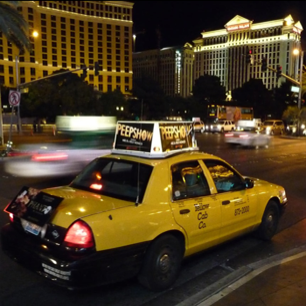 Do people ever ask you to keep your meter off in exchange for a cheaper fare?
I'm sorry but I wouldn't have any idea. They didn't even have forensic science degrees when I went to school.
Share Answer: 
Any kind of lab work, lab courses or internships in laboratories or with the criminal justice system.
Share Answer: 
First of all, no teacher should ever tell you you're 'not smart enough' for a field.
Second, not all forensic work involves a great deal of biology--really only DNA analysis and serology do. Toxicology will require a good chemistry background. But specialized fields such as latent prints, crime scene investigator, questioned documents, digital evidence, ballistics and impression evidence would use little to no biology.
If a formal degree becomes a problem, you might want to see if you can start out in an Evidence/Property area and work up from there.
Best of luck!
Share Answer: 
-OR-
 Login with Facebook
 (max 20 characters - letters, numbers, and underscores only. Note that your username is private, and you have the option to choose an alias when asking questions or hosting a Q&A.)
(A valid e-mail address is required. Your e-mail will not be shared with anyone.)
(min 5 characters)
By checking this box, you acknowledge that you have read and agree to Jobstr.com’s Terms and Privacy Policy.
-OR-
Register with Facebook(Don't worry: you'll be able to choose an alias when asking questions or hosting a Q&A.)



 Browse Jobs
 Host a Q&A
 Search

 Submit Your Question
 Host a Q&A
 Last 7

