
LIsa Black
Cape Coral, FL
Female, 49


I spent the five happiest years of my life in a morgue. As a forensic scientist in the Cleveland coroner’s office I analyzed gunshot residue on hands and clothing, hairs, fibers, paint, glass, DNA, blood and many other forms of trace evidence, as well as crime scenes. Now I'm a certified latent print examiner and CSI for a police department in Florida. I also write a series of forensic suspense novels, turning the day job into fiction. My books have been translated into six languages.
Sorry I went to the link but it just loaded forever and I coudn't view the picture.
UPDATE: Hey on a whim I tried the link again and could see the picture. Unfortunately I still couldn't make a guess as to what the pile is. Though in my opinion it looks too light-colored to be a decomposing animal.
Share Answer: 

I'm sure document examiners could do this fairly easily but I don't know exactly how. I would guess that alternative light source (like infrared or ultraviolet spectrums) could show that there is no difference between the signature and the rest of the document. Or I believe thin-layer chromatography could show that the chemical makeup is the same. A Questioned Document Examiner could tell you much more.
Share Answer: 

It's concerning because juries expect more than is reasonable. Not every case is going to have DNA evidence and you don't always find fingerprints on a surface and eyewitness testimony sounds convincing but can be very unreliable. However an expert can hopefully explain all these issues to make the limitations clear, provided the jury listens.
Share Answer: 
You can't go wrong with as many science classes as you can get, and especially anything that's specifically forensics. Programs that have hands-on labs for processing evidence and crime scenes would be great. Titles and job requirements aren't uniform, so the only way to know is to call the crime labs in your area or whereever you might be interested in working and ask them. At the coroner's office we had to have at least a bachelor's in a natural science (this was before they had forensic science majors). At the police department where I am now, they only require a high school diploma but you get more points in the interviewing process for having a four year degree, so we all have one. You can also go on the websites for professional organizations such as the American Academy of Forensic Sciences and check out their job vacancy postings and see what the various positions require. Good luck.
Share Answer: 
Oral and Maxillofacial Surgeon
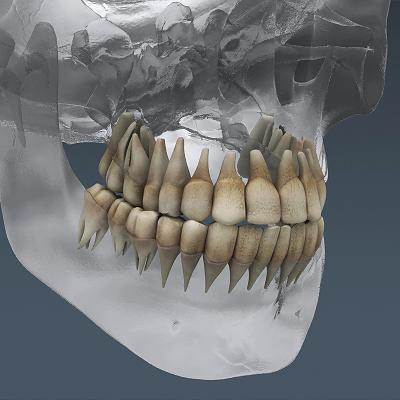 Do you ever operate on guys who get their jaws busted in a fight?
Tattoo Artist
 Have you ever messed up while giving someone a tattoo?
Hotel Employee
 What was the craziest request you ever got from a guest?
Sure, because fingerprints will have ridges and gloves will not.
Share Answer: 
Sorry but I am not trained in facial recognition and I am notoriously bad with faces. My husband teases me about it all the time.I'm sorry I couldn't help!
Share Answer: 
Yes, quite possible. The breast bone blocked the bullet from hitting anything vital and so it wouldn't be fatal. We've had plenty of people shoot themselves in the head but the skull deflected the bullet enough that they either survived or had to fire a second shot.
Share Answer: 
-OR-
 Login with Facebook
 (max 20 characters - letters, numbers, and underscores only. Note that your username is private, and you have the option to choose an alias when asking questions or hosting a Q&A.)
(A valid e-mail address is required. Your e-mail will not be shared with anyone.)
(min 5 characters)
By checking this box, you acknowledge that you have read and agree to Jobstr.com’s Terms and Privacy Policy.
-OR-
Register with Facebook(Don't worry: you'll be able to choose an alias when asking questions or hosting a Q&A.)



 Browse Jobs
 Host a Q&A
 Search

 Submit Your Question
 Host a Q&A
 Last 7

